Gap Visualization & Data Capture Workflow
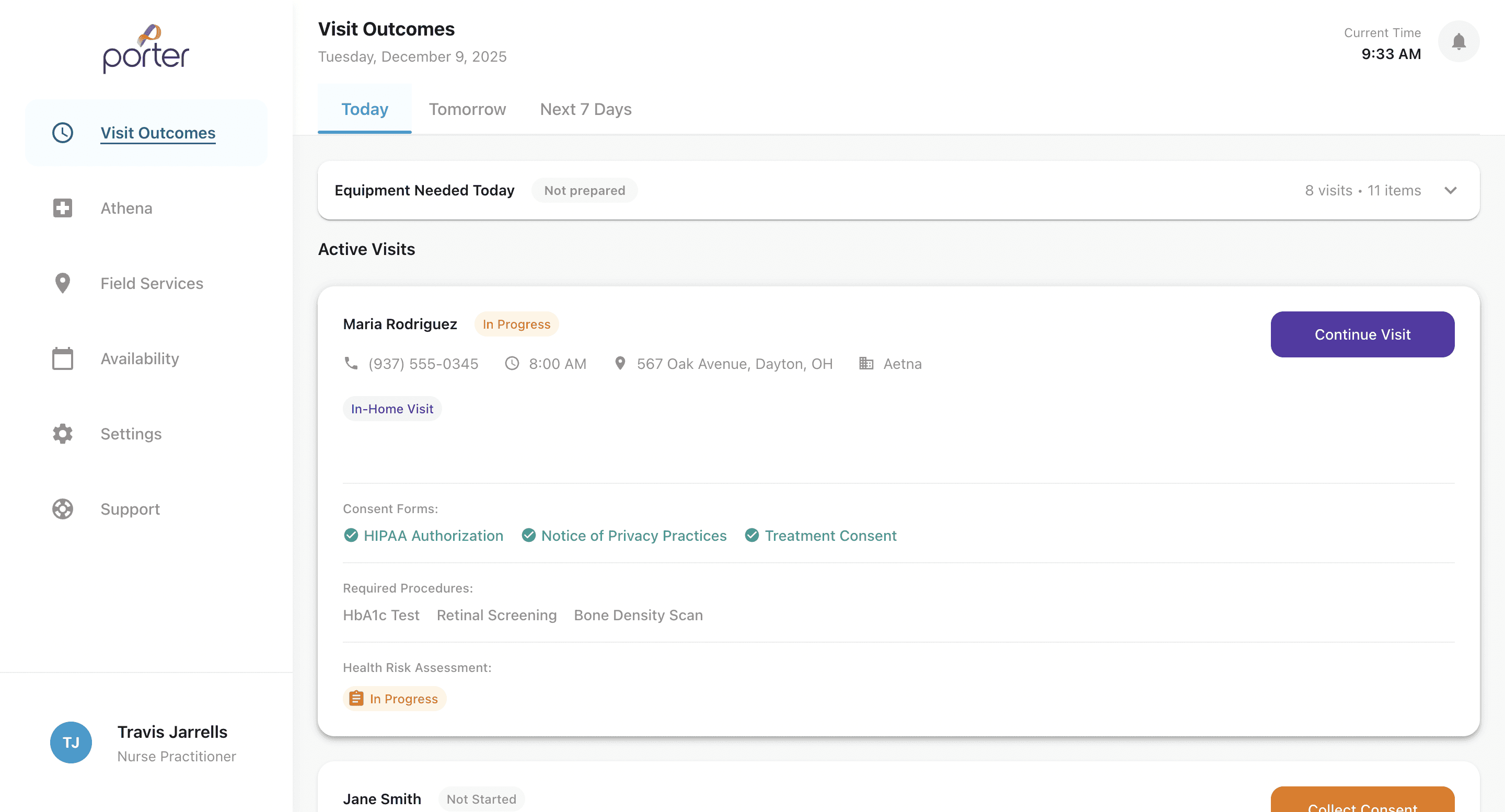
Improving provider workflow clarity while fixing reporting accuracy across the organization.
snapshot
Role: Senior UX/UI Designer & Researcher
Timeline: 2025
Platform: Provider Portal (mobile + web)
Team: Design, Product, Engineering, Operation
↓ 92% reduction in unaccounted for gaps
212 previously missing gaps successfully documented
Estimated $2.1M increase in CMS reimbursement
Contributed to Star Rating improvement across payer contracts
ROI: 5:1, validated by CFO
SUS: 89 (Excellent)
Usability: 4.5 / 5
Context
Porter needed a reliable way for providers to capture gap-closure data during preventive visits. Missing documentation made it difficult for payers to receive credit toward CMS quality metrics, leading to financial loss, operational cleanup, and inaccurate reporting.
Providers also lacked a predictable workflow for managing equipment, documenting tasks, and confirming gap closure during visits. The result was unnecessary cognitive load and inconsistent data quality.
I was responsible for redesigning the end-to-end data capture experience to create a clear, structured workflow that supported providers while ensuring payers received accurate, billable documentation.
the problem
231 gaps across payer contracts were missing documentation and couldn’t be reported
Providers had no consistent workflow to follow during visits
Equipment requirements weren’t surfaced at the right time
Documentation often happened after the visit, leading to missed or incomplete records
Inconsistent data reduced the accuracy of quality scores and Star Rating calculations
Operational teams spent time correcting or chasing down missing information
The lack of structure created risk for both the provider experience and the organization’s financial performance.
my role
As the Senior UX/UI Designer and Researcher I:
Conducted stakeholder interviews with operations, clinical leadership, and provider managers
Mapped the end-to-end workflow for in-home preventive visits
Designed the structured, step-based flow for data capture
Led multiple rounds of prototype testing with providers
Created annotated workflows and implementation-ready specs for engineering
Worked with the CFO and operations teams to understand the financial impact of documentation accuracy
Collaborated with product managers to ensure alignment with payer requirements and CMS quality metrics
Research Highlights
From interviews and usability sessions with in-home providers:
Providers needed a predictable, linear workflow to stay organized during visits
Documentation must happen at the point of work, not after
Equipment prompts need to appear before tasks, not buried in secondary screens
Clear gap states (open, in progress, completed) reduced confusion
Providers preferred checklist-style flows with strong hierarchy and minimal cognitive load
Visual consistency and accessibility were critical in varied lighting environments
Final usability testing validated the design:
SUS score: 89
Usability rating: 4.5 / 5
Providers described the flow as “clear,” “easy to follow,” and “exactly what I wish I had before.”
Design overview
1. Workflow Entry Point
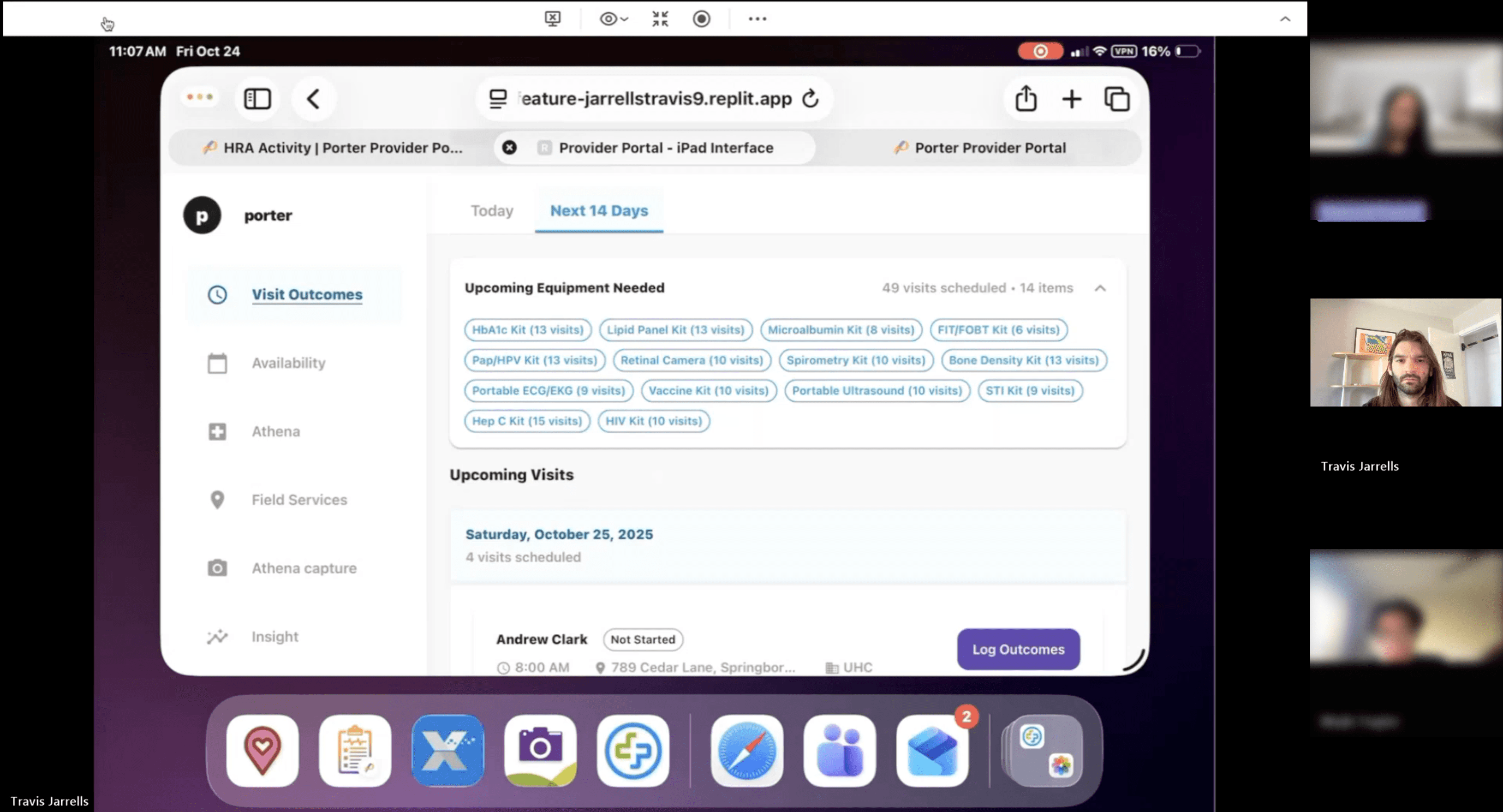
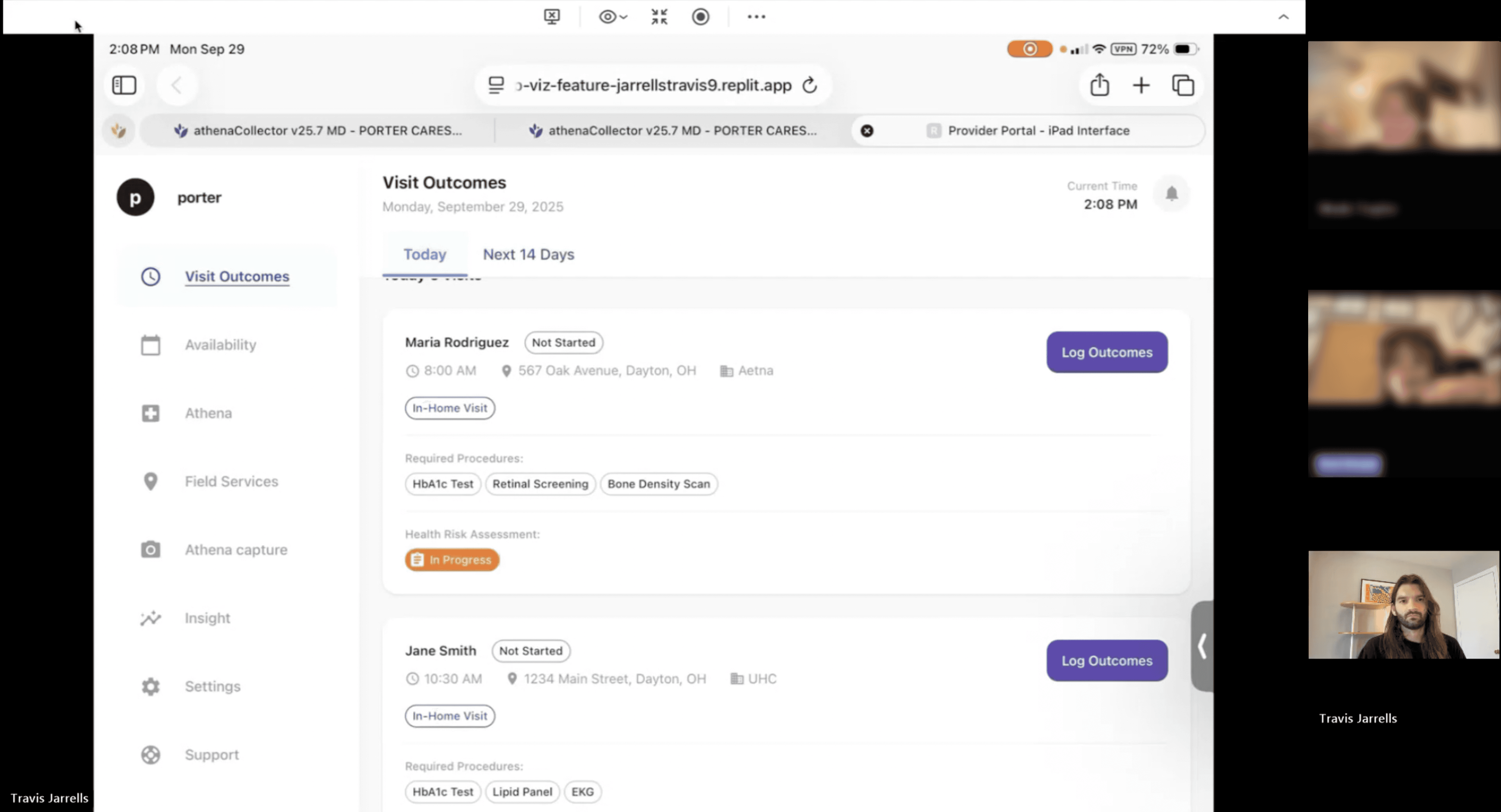
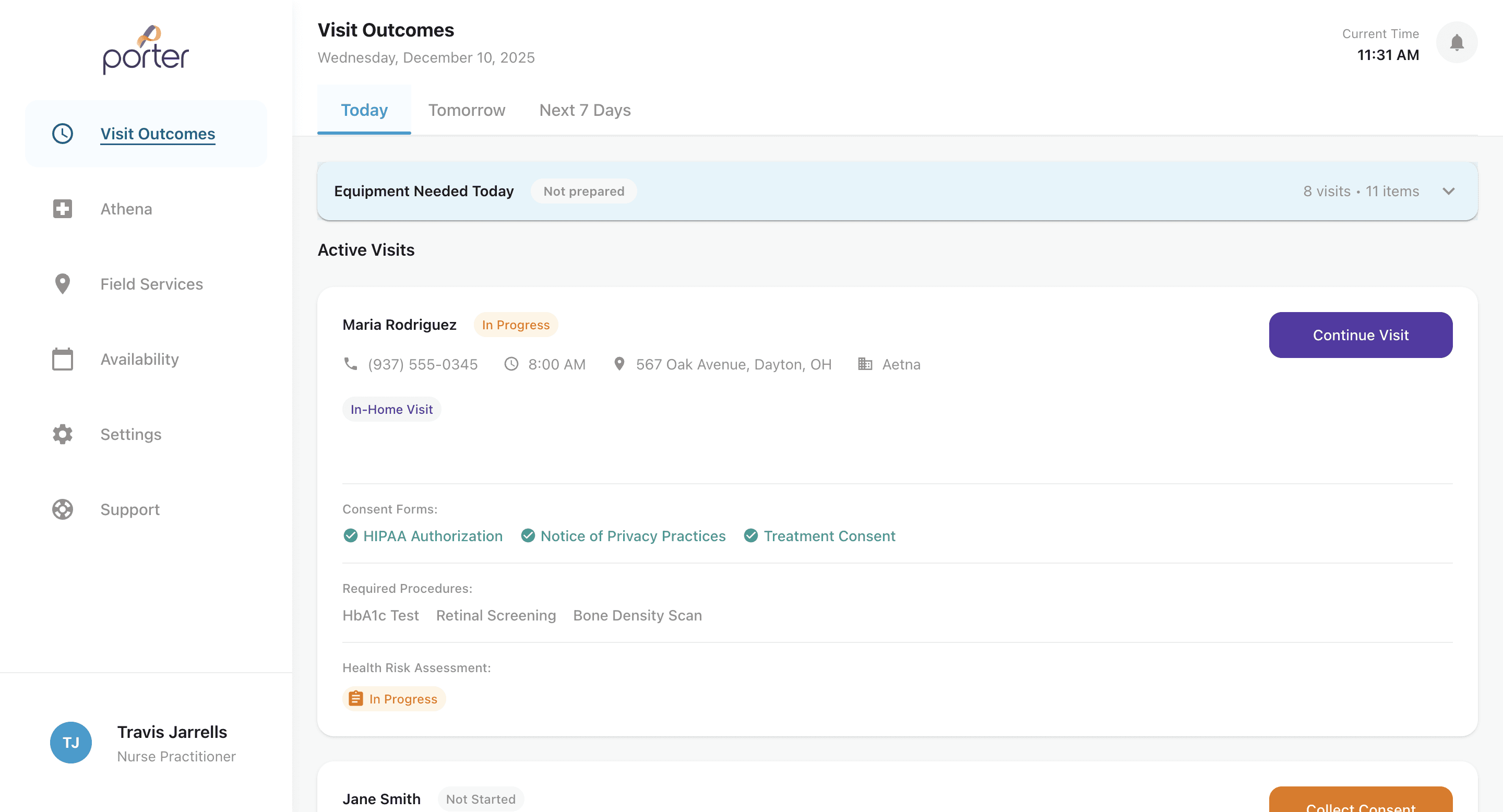
A clean, structured entry into the visit flow, showing each visit and equipment needed for the day.
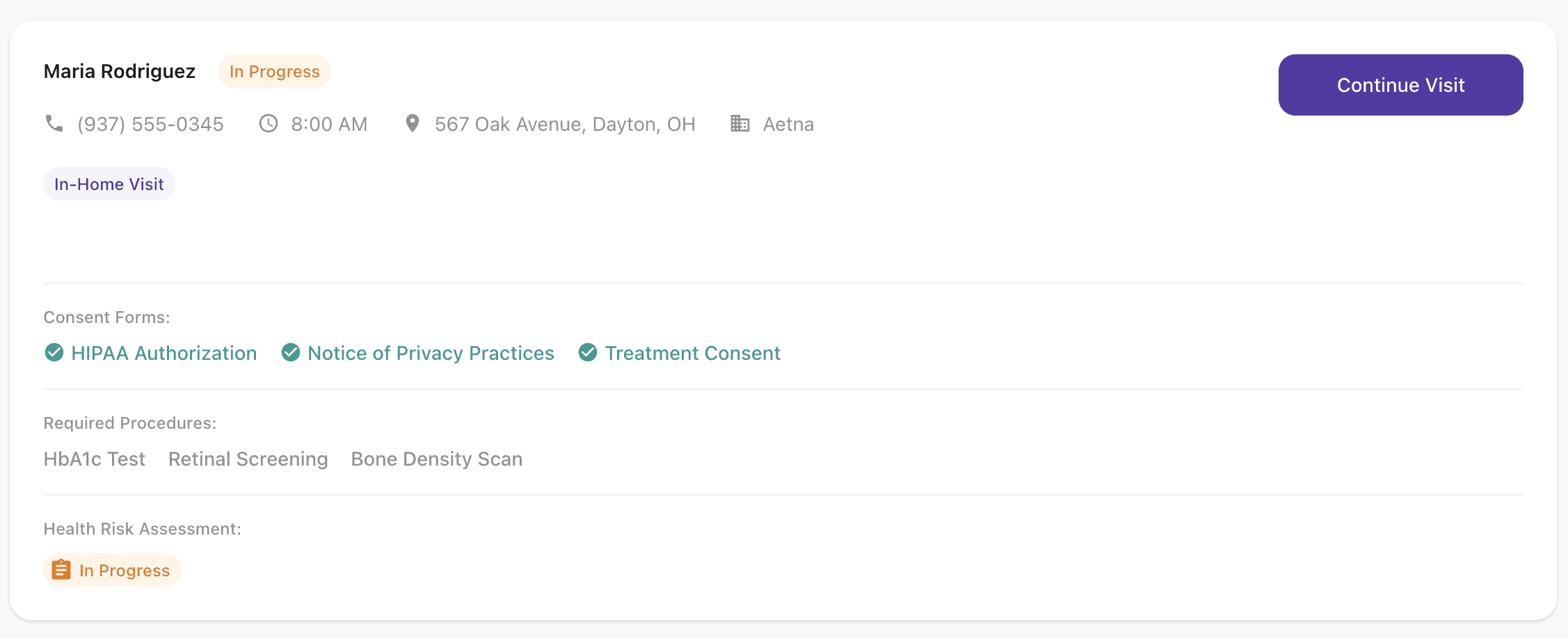
2. Gap Cards
Each gap surfaces essential details, required equipment, and clear next steps. Providers can scan the list quickly without drilling into multiple layers.
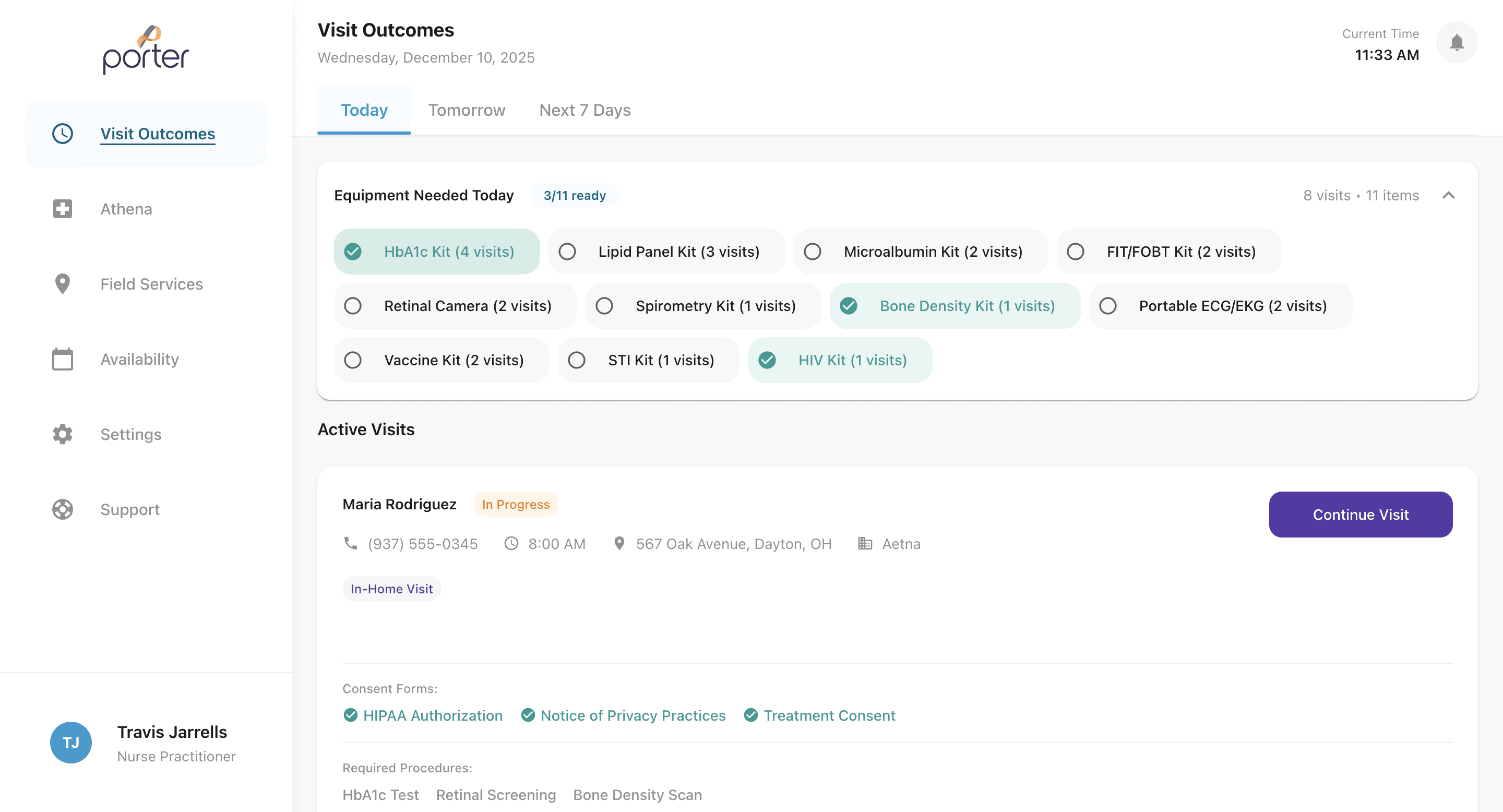
3. Equipment Checklist
Required tools appear at the top of the visits list, allowing providers to track what equipment they have prepped for the day.
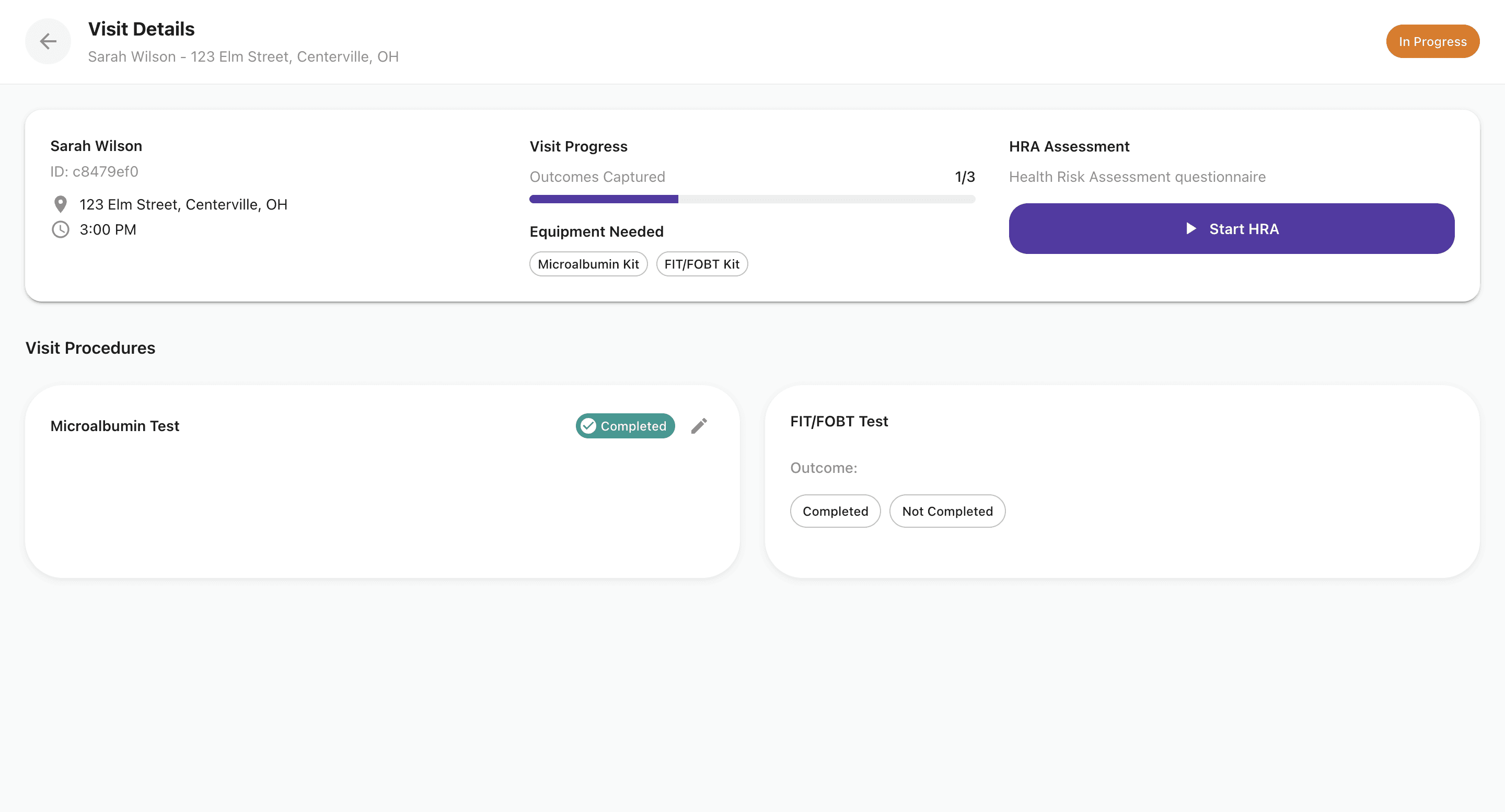
4. Completion Flow
Providers document gap status immediately after performing each task, ensuring accurate, real-time reporting.
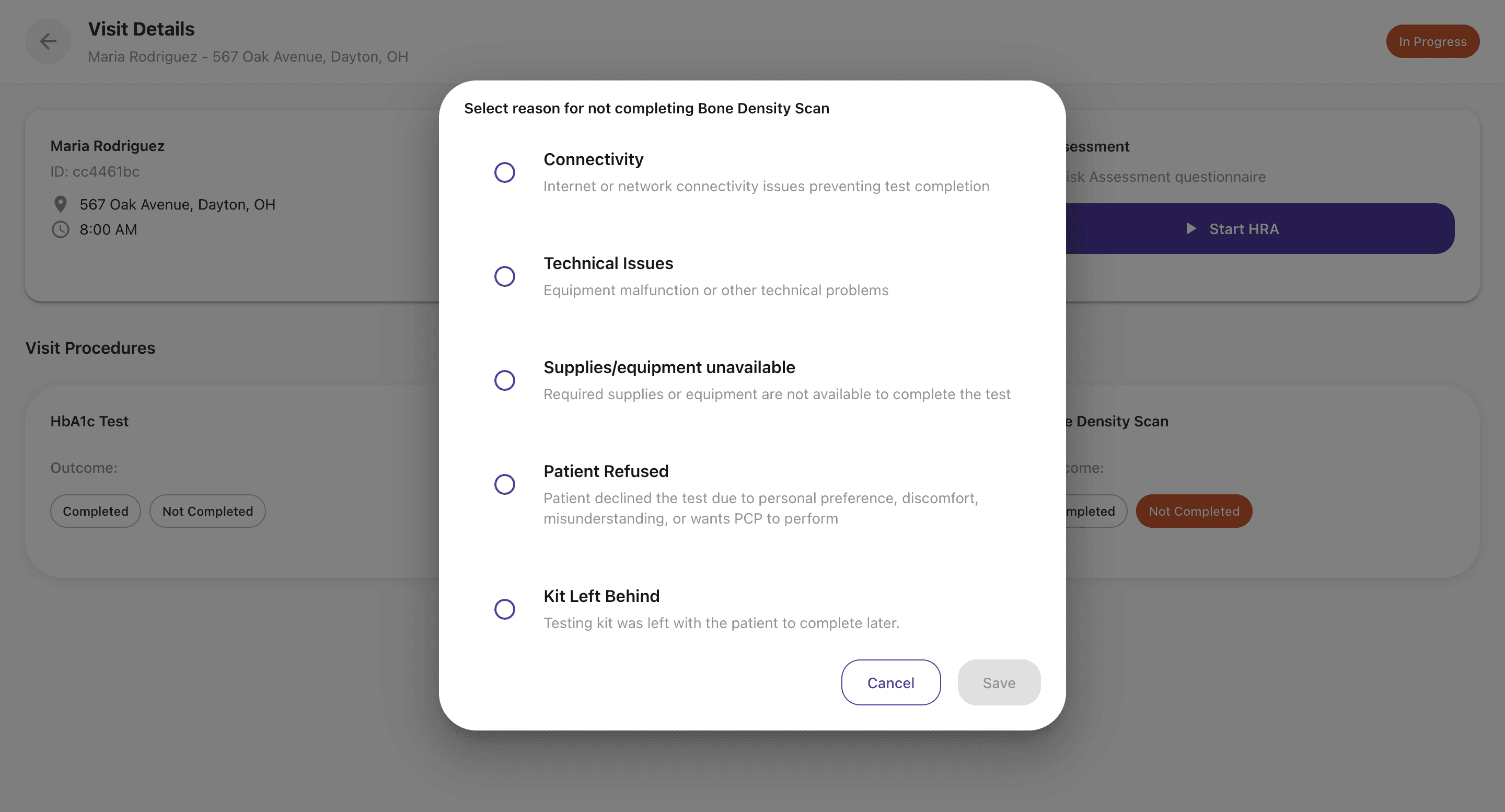
5. Missed Procedures
Providers can record why a gap wasn’t completed during the visit. This was missing in the previous workflow and now prevents payers from seeing open gaps without context.
Business impact
Before the redesign, 231 gaps across payer contracts were missing documentation. These unaccounted for gaps prevented payers from receiving credit toward CMS quality measures and Star Ratings.
After launch:
92% of missing gaps (212 total) were successfully documented
The improved documentation contributed to Star Rating improvements across multiple payers
Based on internal financial modeling, this represented an estimated $2.1M increase in CMS reimbursement
The CFO calculated a 5:1 ROI for the initiative
The feature created meaningful financial and operational value by strengthening data integrity and reducing documentation risk.
outcome
The redesigned workflow delivered measurable impact across usability, operations, and financial performance:
Providers documented 92% of previously missing gaps
Estimated $2.1M in increased CMS reimbursement
Supported higher Star Ratings for payers
SUS score: 89 and usability rating of 4.5 / 5
Reduced operational cleanup and manual auditing
Created the foundation for future provider-facing workflows
The project demonstrated the value of pairing workflow clarity with strong UX patterns to improve both provider experience and payer outcomes.
What I Learned
Designing for field-based providers reinforced how much structure improves confidence and accuracy. The biggest impact came from:
surfacing the right information at the right time
reducing ambiguity in step-based tasks
ensuring documentation happens in the moment
aligning operations, clinical teams, and engineering around a shared workflow
This experience strengthened my approach to designing for operational environments where clarity and timing directly affect performance and outcomes.
Gap Visualization & Data Capture Workflow

Improving provider workflow clarity while fixing reporting accuracy across the organization.
snapshot
Role: Senior UX/UI Designer & Researcher
Timeline: 2025
Platform: Provider Portal (mobile + web)
Team: Design, Product, Engineering, Operation
↓ 92% reduction in unaccounted for gaps
212 previously missing gaps successfully documented
Estimated $2.1M increase in CMS reimbursement
Contributed to Star Rating improvement across payer contracts
ROI: 5:1, validated by CFO
SUS: 89 (Excellent)
Usability: 4.5 / 5
Context
Porter needed a reliable way for providers to capture gap-closure data during preventive visits. Missing documentation made it difficult for payers to receive credit toward CMS quality metrics, leading to financial loss, operational cleanup, and inaccurate reporting.
Providers also lacked a predictable workflow for managing equipment, documenting tasks, and confirming gap closure during visits. The result was unnecessary cognitive load and inconsistent data quality.
I was responsible for redesigning the end-to-end data capture experience to create a clear, structured workflow that supported providers while ensuring payers received accurate, billable documentation.
the problem
231 gaps across payer contracts were missing documentation and couldn’t be reported
Providers had no consistent workflow to follow during visits
Equipment requirements weren’t surfaced at the right time
Documentation often happened after the visit, leading to missed or incomplete records
Inconsistent data reduced the accuracy of quality scores and Star Rating calculations
Operational teams spent time correcting or chasing down missing information
The lack of structure created risk for both the provider experience and the organization’s financial performance.
my role
As the Senior UX/UI Designer and Researcher I:
Conducted stakeholder interviews with operations, clinical leadership, and provider managers
Mapped the end-to-end workflow for in-home preventive visits
Designed the structured, step-based flow for data capture
Led multiple rounds of prototype testing with providers
Created annotated workflows and implementation-ready specs for engineering
Worked with the CFO and operations teams to understand the financial impact of documentation accuracy
Collaborated with product managers to ensure alignment with payer requirements and CMS quality metrics
Research Highlights
From interviews and usability sessions with in-home providers:
Providers needed a predictable, linear workflow to stay organized during visits
Documentation must happen at the point of work, not after
Equipment prompts need to appear before tasks, not buried in secondary screens
Clear gap states (open, in progress, completed) reduced confusion
Providers preferred checklist-style flows with strong hierarchy and minimal cognitive load
Visual consistency and accessibility were critical in varied lighting environments
Final usability testing validated the design:
SUS score: 89
Usability rating: 4.5 / 5
Providers described the flow as “clear,” “easy to follow,” and “exactly what I wish I had before.”


Design overview
1. Workflow Entry Point
A clean, structured entry into the visit flow, showing each visit and equipment needed for the day.

2. Gap Cards
Each gap surfaces essential details, required equipment, and clear next steps. Providers can scan the list quickly without drilling into multiple layers.

3. Equipment Checklist
Required tools appear at the top of the visits list, allowing providers to track what equipment they have prepped for the day.

4. Completion Flow
Providers document gap status immediately after performing each task, ensuring accurate, real-time reporting.

5. Missed Procedures
Providers can record why a gap wasn’t completed during the visit. This was missing in the previous workflow and now prevents payers from seeing open gaps without context.

Business impact
Before the redesign, 231 gaps across payer contracts were missing documentation. These unaccounted for gaps prevented payers from receiving credit toward CMS quality measures and Star Ratings.
After launch:
92% of missing gaps (212 total) were successfully documented
The improved documentation contributed to Star Rating improvements across multiple payers
Based on internal financial modeling, this represented an estimated $2.1M increase in CMS reimbursement
The CFO calculated a 5:1 ROI for the initiative
The feature created meaningful financial and operational value by strengthening data integrity and reducing documentation risk.
outcome
The redesigned workflow delivered measurable impact across usability, operations, and financial performance:
Providers documented 92% of previously missing gaps
Estimated $2.1M in increased CMS reimbursement
Supported higher Star Ratings for payers
SUS score: 89 and usability rating of 4.5 / 5
Reduced operational cleanup and manual auditing
Created the foundation for future provider-facing workflows
The project demonstrated the value of pairing workflow clarity with strong UX patterns to improve both provider experience and payer outcomes.
What I Learned
Designing for field-based providers reinforced how much structure improves confidence and accuracy. The biggest impact came from:
surfacing the right information at the right time
reducing ambiguity in step-based tasks
ensuring documentation happens in the moment
aligning operations, clinical teams, and engineering around a shared workflow
This experience strengthened my approach to designing for operational environments where clarity and timing directly affect performance and outcomes.